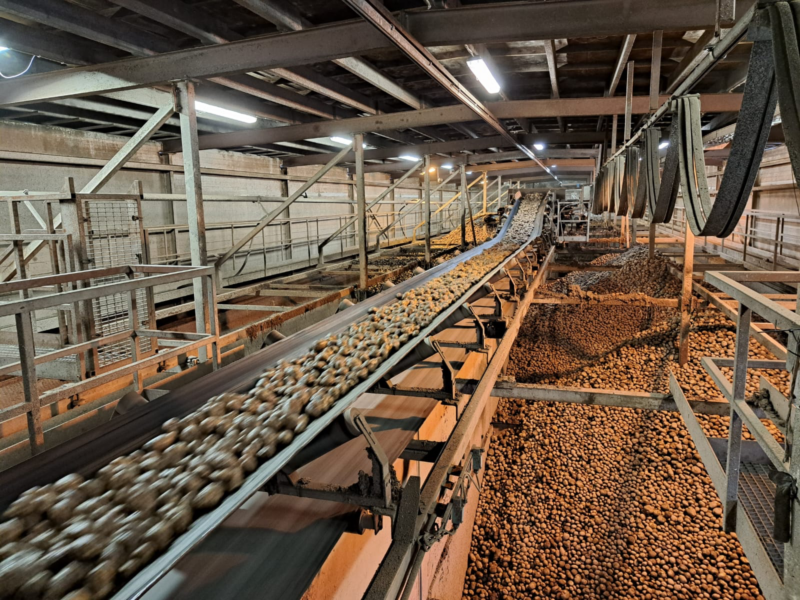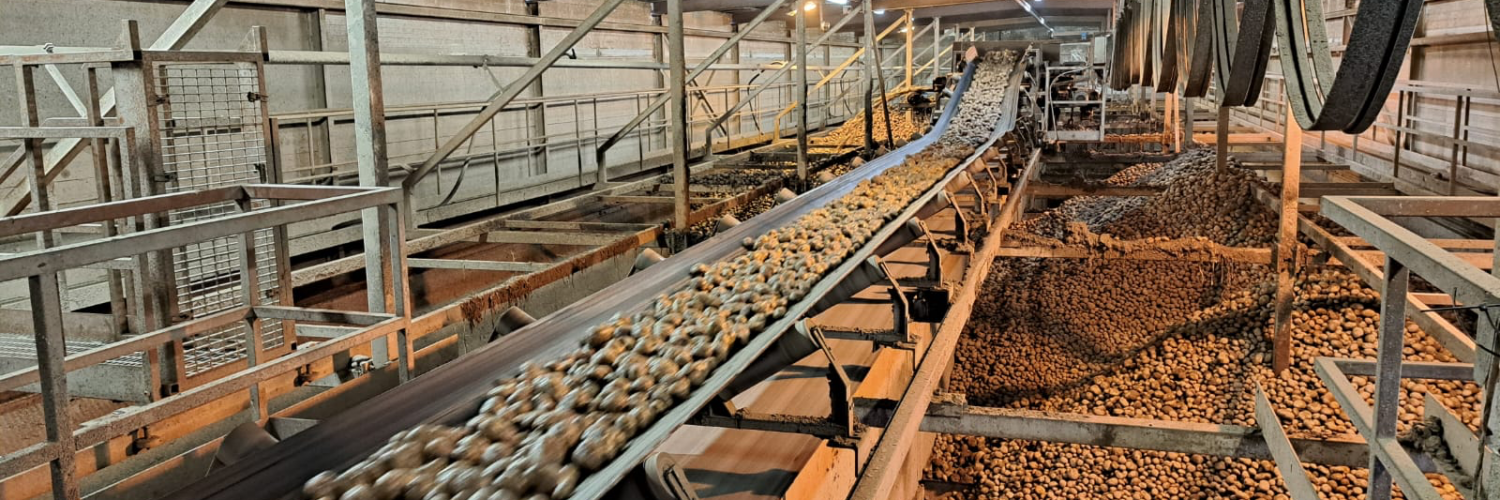
October is here, and potato season is in full swing at Chemigate’s Lapua plant, where potato deliveries kicked off during the last week of August. Around here, you know autumn has arrived when trucks start lining up in the yard and the familiar rumble and thud of potatoes being unloaded fills the air. There are also plenty of new faces around, as our seasonal workers have arrived and are getting familiar with the processes.
Getting potatoes from the field to the factory takes quite a few things going right. First, you need just the right amount of sunshine and rain to give them a good start in life. Then, of course, there’s the hard work and care of the potato growers, making sure those little spuds grow into big, healthy ones.
But what actually happens when tonnes of potatoes are tipped off trucks into a giant pit and carried into the production process on conveyor belts? How many steps does it take to turn a humble potato into starch? Well, quite a few, actually!
It all starts at reception, where the potatoes are checked for starch content and cleanliness. Next, they’re temporarily stored in a massive storage silo that can hold around one million kilos of kokopoika – whole, unpeeled potatoes! That’s a lot of spuds!
From storage, the potatoes are transported into the process using water. First, stones and other unwanted bits are removed. Then it’s time for the potatoes to meet the graters, which break down their structure. Ouch!
The actual starch production – or more accurately, starch separation – happens in several stages using mechanical equipment and some good old laws of physics.
First, the potato peels and fibres are separated using conical screens. Next, the potato cell juice and starch granules are separated in tiny hydro cyclone tubes using centrifugal force. Finally, any remaining moisture and impurities are removed from the starch.
The starch is then dried with hot air. Some of it goes into storage for later use, while the rest heads straight for further processing.
And here’s another cool thing: nothing useful goes to waste! The potato cell juice produced during the process is turned into an organic-approved recycled fertiliser, while the potato fibres and peels are put to good use as cattle feed.
Of course, getting to this point takes a lot more than just machinery. It takes plenty of watchful eyes, a good dose of problem-solving skills for those unexpected surprises, and constant attention to detail to keep everything running smoothly and make sure the final product meets our high-quality standards!
FUN FACTS!
- Kokopoika: A word from the Southern Ostrobothnian dialect meaning a whole, unpeeled potato. For example, “laitetaan kokopoijat kiehumahan” roughly translates to “Let’s get those spuds boiling!”
- Did you know? Potatoes are made up of approximately 70% water!
- A little history: Potato flour – or, to be more technical, potato starch – production in Finland dates all the way back to 1929. That’s when agronomist Hannes Seppälä established his first factory in Tali, in the rural municipality of Viipuri, under the name Maataloustuottajain palvelu. (Source: Maaseudun Tulevaisuus)
- And speaking of history: The Lapua plant wasn’t always where it is today! It was originally located in the centre of Lapua, across the river near what is now the Latosaari dance venue. In the early 1980s, the factory moved to its current home in Kiviniemi, Lapua.